Dinnertime: nourishment of body and soul

As we settle into the whirlwind of fall activity, it may become necessary to set aside down time to be a Family. 

“Down time?! Are you Crazy?! Between ferrying kids to and from scouts and sports and dance and karate and gymnastics and music lessons and play practice and jobs, and the multitude of meetings and appointments and errands and other obligations required of us, how in the world can there possibly be time left to set aside?”

There’s a story about a teacher who presents her students with a jar filled with rocks and the question of whether or not the jar is full. They unanimously answer that yes, indeed the jar is full. She pours pebbles over the rocks, shaking the jar gently and filling the crevices between the stones. “Is the jar full now?” “It sure looks full” Sand is added. “Full?” “Definitely!” She proceeds to add water.

This is suggested as a metaphor for setting priorities in life. The rocks represent the things that make our lives full: family, partner, children, friends, and health. The pebbles represent other things that matter: work, school, car, house… The sand and water are everything else. If you fill the jar with “sand” first, it leaves no room for the relationships that are most critical to our well-being in this life.

How can we find time to really get to know one another as individuals living in the same family, when everyone is running around doing whatever it is they do from dawn until bed time?

Having grown up during a time when most families sat down together to share the evening meal, I never questioned that the dinner hour provides the time necessary to connect with one another. But things have changed a lot since then and consistently gathering together over family dinner is no easy feat. So we settle for a drive through McDonald’s and eat together in the car while running to the next appointed task. Round and round we go, until we arrive home frazzled and grumpy, with little patience left for our most beloved.

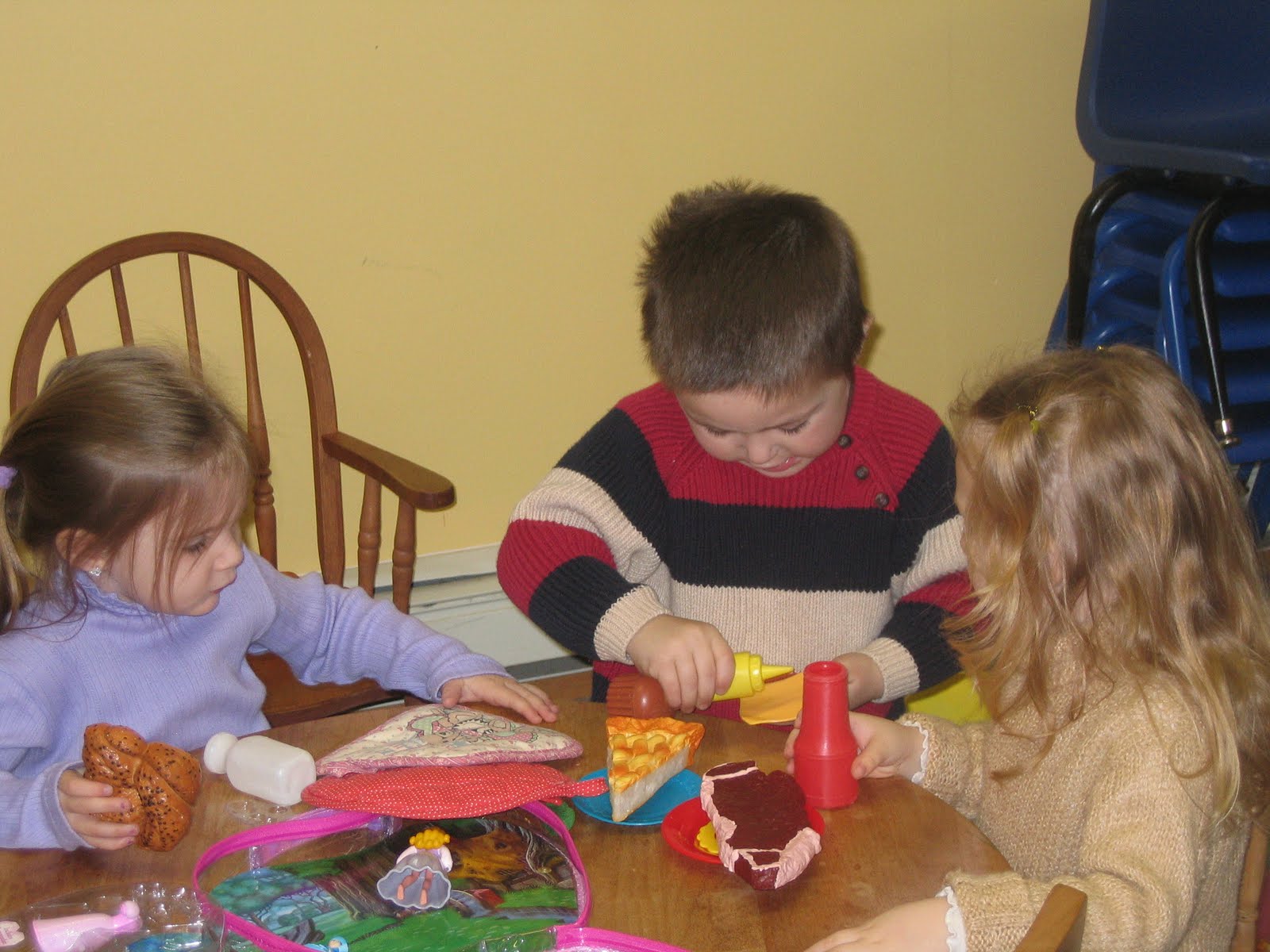
The dinner table is the place to learn manners and how to be polite; it is where our children learn to be social with grace. You are a role model and when your children hear you say “please” and “thank you”, observe you sitting still, chewing with your mouth closed, and listening to one another, they are more likely to follow suit. If being polite in social situations is the expectation, children learn to carry their manners into other aspects of life.

By setting aside time to share dinner, more planning and careful preparation goes into creating a healthier meal than what we are able to get on the fly. One way to make this seem more manageable is to get into a routine of preparing several meals at a time for the freezer (soup, spaghetti sauce, chili, casseroles…) This in itself can become a family affair, with the added benefit of teaching the kids kitchen safety and the basics of cooking.

At the dinner table (or perhaps breakfast is a better option for your family), we become exposed to our children’s way of life through discussion of school, friends, books, music, TV, current events and societal pressures. Sharing a meal with those we love allows us to celebrate and commiserate, to problem-solve and learn about where we fit into the grand scheme of things.

When my kids were little and needed to have dinner before Daddy could get home, they would later join us at table with a bowl of cereal before going to bed. As they became involved in their own extra-curricular activities (which invariably occurred through the typical dinner hour) mealtime was pushed back, and often we did not sit down until 8:30 or later.

But here’s the thing: Two of my sons have gone off to set up housekeeping together with some of their friends in another state, and they continue to sit down together for dinner every night. For as my 24 year-old has so wisely observed: “Family is sacred.”- RDW (9-17-10)

Creativity Rediscovered

How do you respond when someone asks for your creative involvement in a project?
    
Too many times when I mention to acquaintances the possibility of dabbling in art, the response is, “I don’t have a creative bone in my body- I can’t draw a straight line!”
      
I usually feel all thumbs myself when asked to put crayon to paper. And certainly it goes back to when I was a child and thought that my art was quite lovely, until it was Jane Colony’s work that was spot lighted time after time. One of my best drawings was a winter wonderland pastel I made in fifth grade, but someone tore it off the wall in the hallway and it got trampled. This is the perfect metaphor for what happens to most of us as the creative genius of early childhood becomes stifled.
     
Kids love to make art. Children progress through the stages of scribbling and their first attempts at self portrait, to discover that one can draw almost anything simply by putting shapes together. They may learn how to draw rockets or sharks or flamingos or dinosaurs, and this is what they draw…over and over and over and over.

Left to their own devices, they finally move on to experiment by sketching different things with such abandon as to use every scrap of paper available. Until that inevitable time when self-consciousness tries like the dickens to squelch the radiance of who we are meant to be.
      
We become so concerned with what other people are thinking about us that we come to fear the full expression of who we are because someone might laugh or disapprove of us- if not in reality, certainly in our minds. So we hold ourselves back, disqualifying our thoughts and creations before someone else can. When in reality it doesn’t matter what anyone else thinks.
       
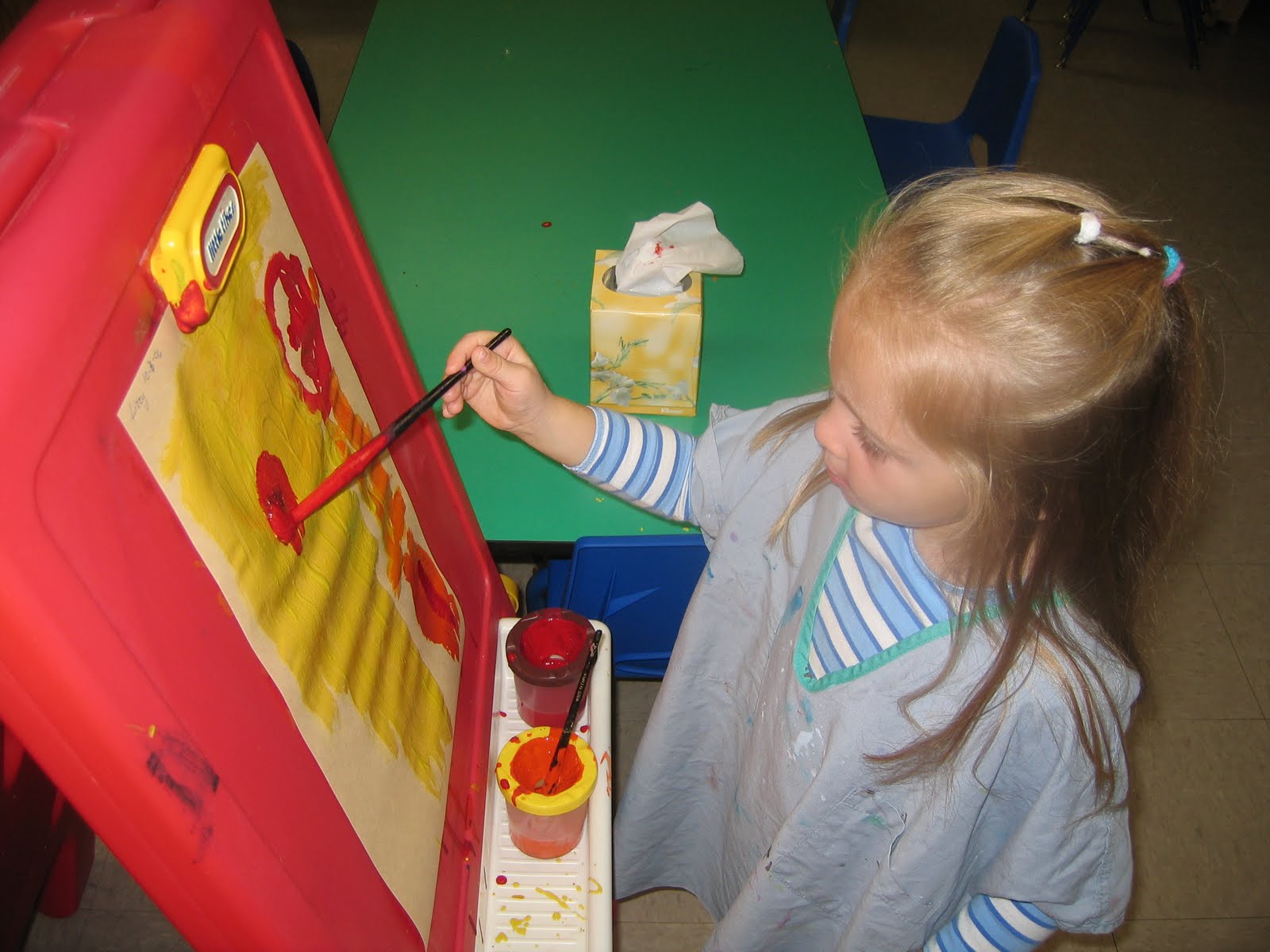
Nurture your child’s creativity by providing a comfortable atmosphere where s/he can discover, experiment and explore. Establish a space- a room, corner, or table, to be the designated art area to keep and use their arts and crafts independently, Allow your child the freedom to create away from your constant supervision. Provide an endless supply of “stuff” including crayons, markers, paint, paper, scissors, glue, tape, clay, natural materials (shells, pebbles, feathers, pine cones) and reusable stuff (bows, spools, boxes, egg cartons).
       
As you provide opportunities for your child to experiment and discover his/her creativity, it is important to set guidelines. For example:
  • Art materials are not to be wasted and to be kept in the art area at all times.
  • Do not put paste, paint, glue, chalk, or any other materials in your mouth- they are not for eating, drinking or tasting.
  • Work only on your own project and only on the paper you are given.
  • Don’t forget to wear a smock for messy projects!
Set limits early on, with the expectation that they clean up and put their things away each time they use them. You will need to demonstrate the proper way to wash paint brushes, close bottles of glue, and replace marker covers securely. If you show by your attitude that you sincerely trust your child, s/he will be careful. 

As your child practices expressing himself some encouragement may be called for: “I bet if you practice on a different piece of paper, it will come out the way you want it to,” or “If you make a mistake, usually you can turn it into something even better than it was before.”
       
I have seen kids who are otherwise unable to sit still or focus on anything for more than a few minutes, let go of outside distraction and focus on the creative spirit that is within each of us. Being creative in a nonthreatening environment instillsasense of peace, a connection with something greater than ourselves, and the greatness of our own Self! 
(RDW 2007, revised 2010)


http://growingplaceswithkids.blogspot.com/p/expressivearts-beneficial-toeducation.html

Rules for the Road

The wicked fear that was instilled in me from that young age affected me for many years. This can be avoided by approaching topics of safety (road and fire safety, stranger danger, etc.) in a calm and matter of fact way during the course of our daily activities.

Whether you live in a residential neighborhood or in the country, it is a good idea to walk around town with your child periodically so that s/he has an opportunity to experience first hand the importance of “rules for the road”.

Here are some of the points to be made in your day to day travels:
  • Teach your child to “Stop, Look, and Listen, before you cross the street. Use your eyes, use your ears, and then use your feet.” Repeat this rhyme every time you cross the street so that it becomes automatic. 
  • Discuss the importance of crossing with an adult who loves him/her, because drivers don’t always see little people on the road.  
  • Talk about the dangers of chasing balls, pets, other kids into the road.  
  • Explain the reasons for cross walks and traffic lights. When you are at a traffic light, be sure to obey the “don’t walk” light whether or not there is any traffic, for you are setting an example, and young children don’t have the experience to determine whether there is enough time to cross before the car down the street reaches the crosswalk.
  • Demonstrate looking over your shoulder to see if a car is coming from behind at the intersection. 
  •  Tell your child that running across the street is never a good idea because s/he may trip in front of on-coming traffic.  
  • Talk about the risk involved in darting into a parking lot or between vehicles: “Drivers are not expecting little children to appear from between parked cars and you     might get hit.” 

As children become a little older they may run ahead of you on the side walk. Set a limit as to how far ahead they can go (e.g., to the next driveway, or the corner, or the second tree). Get them into the habit of stopping at each driveway to check for traffic.

If the kids are riding bikes, they need to be wearing helmets (it’s the law!); and to stay on the sidewalk, always checking driveways. Be sure to remind them that sidewalks are for walkers first, and that they need to stop and wait for someone on foot to pass.

These are all things that we take for granted, but it seems that there is a whole generation of kids that were never taught road etiquette. How often do we hear the squeal of brakes; or curse under our breath at the kids walking, riding, skating down the middle of the road as if they own it; or stepping out into oncoming traffic assuming that the driver will stop for them. Little do they know whether this is a student driver lacking experience behind the wheel, or an elderly person whose sight and reflexes aren’t what they used to be. It may be someone distracted by their sound system or telephone, or driving while intoxicated.

We often forget that something which becomes so second nature to us as adults, must be taught with care, and learned by example. And that a refresher “course” may be in order as the children grow older. 

RDW. 2003; revised 2010

There are many ways to communicate

As a parent, you feel like a broken record, repeating the same words of advice or reprimand over, and over, and over. You might begin to wonder if you should take your child to a hearing specialist. In fact, when my kindergartner came home with the paper ear pinned to his shirt indicating that he had had his hearing tested that day, I fully expected to receive a phone call with the dreaded news that he was hearing impaired! 
     
So often the assumption is made that the kids aren’t paying attention when we discuss things with other adults regarding our issues in parenting, financial concerns, marital difficulties, grandma’s terminal illness, or current events. 
     
Believe me when I say they are listening. We need to remain vigilant to their presence when discussing matters that may be upsetting, misconstrued, or place little ones in a position of taking sides. 
      
Young children take things literally; they are not yet able to distinguish a figure of speech from actuality. Once when I said, “I’m pooped!”, my little son responded, “you better wipe yourself!” An off the cuff remark like, “I’ll die if I don’t get that job,” will instill an incapacitating fear for your life if overheard by your preschooler. 
      
We tend to forget that there are many ways to communicate. What child does not understand a nod or shake of the head, a beckoning finger, an index finger to lips, a scowl, or a sincere look of approval? 
      
It’s when you think kids are not paying attention that they take notice. They realize that when you hang their artwork on the refrigerator, you appreciate the work that went into it. They remember the times created especially for them: the effort put into a special event on their behalf; the flowers, cookies or favorite meal in their honor; time set aside to give them your undivided attention. They even come to understand that the reason you yell when they are doing something foolhardy, is because you love them and want them to stay safe. 
     
Always keep in mind that actions speak louder than words. Children reflect our attitudes regarding prejudice, forgiveness, the environment, our lifestyle. They grow to exhibit the values and actions learned in their home. 
      
A child who’s parents use force, learns that this is how one gets what they want. Parents who smoke cigarettes are that much more likely to raise children who smoke. Ask just about any kid who hates bugs and snakes, and invariably mama hates them as well. You can pretty much bet when you see a little boy struggling like the dickens not to cry, that he has been taught that “big boys don’t cry- crying is for sissies” 
     
There have been many times through the years that I’ve wondered how my kids could possibly have known how beloved they were. Sure I would tell them a hundred times a day that I loved them, but did they believe me when it seemed to me all that came out of my mouth was cautionary or reprimanding? I swear I sounded exactly like the adults in the Charlie Brown cartoons, even to myself: “Mwa mwa mwa mwa mwaahh”. 
     
When one of my kids was in 5th grade participating in the D.A.R.E. Program (Drug Abuse Resistance Education ), he was asked to write about a time when he felt especially loved. His answer: “When my mother stayed home from an important field trip because I was sick” 
      
As my children grow into adulthood it occurs to me that I no longer have to tell them to find something that they are passionate about, to do their job and do it well, to make the world a better place, that there are consequences to every action we take. They have heard all the words. All we can do now is live our lives in the way we hope for them to live theirs. 
-RDW (9-15-10)

Gracious Acceptance

One of my very favorite movies is Pay It Forward. It is about a young middle school student challenged by his social studies teacher to develop and implement a plan to make the world a better place. The boy takes in a down and out homeless person and helps him get on his feet, making a huge impact on the quality of this young man’s life. He in turn is required to have a part in improving the lives of three other people in need, who are required to do the same, and so on. I love this story.
Throughout our lives, there are times when we are faced with the necessity of accepting help from other people. My biggest issue happens to be with transportation. Newly independent, I used to leave the house at 3:30 a.m. to walk the six and a half miles to the town where my ride to work lived. He insisted on coming to pick me up; I absolutely refused on the grounds that I could never impose on someone like that. So he felt guilty, and I felt exhausted.  
     
Late one night years later, my husband and I were driving to visit a friend who lived in the middle of nowhere, and the battery on our car became so run down that we had no headlights to speak of. We were crawling along the pitch black and twisting road when a young couple came along and offered to guide us to our destination. It involved these people going 30 miles out of their way. They insisted, assuring us they had nothing better to do. Upon our arrival, they turned to go back from whence they came, and being quite broke, all we could do was to wish them the same good fortune one day. It was an amazing experience for all of us. Now, every time I have a chance to do something extraordinary for someone else, I think of those two kids.
      
It is not easy to accept help or a gift. Someone offers to help us do something we would not otherwise be able to do (physically, financially, or through any number of limitations) and we feel beholden to him or her to return the favor or gift. It is not necessary or expected in most cases. People are good; they want to help. Doing something for someone else feels good! And you will certainly have an opportunity to lend a hand to someone else down the line.
     
Setting an example by involving children in random acts of kindness has a powerful impact on the type of people they grow up to be. Children need to learn that doing for others is at least as gratifying as being the recipient of material things, They need see us doing things because it is the right thing to do, rather than because we expect something in return. Likewise, they need to learn not only that it is okay to ask for and accept help when it is needed, but how to do it as well.
     
We need more random acts of kindness in this world. If we are on the receiving end, we need to learn grace in acceptance, and remember the pleasure we derive from an opportunity to do the same.

RDW 05-26-07, revised 10-8-09

Easing the transition when your child starts school

One of the most important rites of passage for both parents and children happens when we send our little darlings off to school for the first time. What an exciting, scary, bittersweet time for parent and child.
     
Some children march off to school and have no trouble whatsoever settling in. For others, it can be more traumatic. And there is nothing worse than leaving your child in the throes of separation and stranger anxiety when you want so desperately to relieve them of this despair.
     
My son happily went off to school for the first three days of kindergarten. But the following Monday he decided he had had enough. When we started out to meet the bus, he ran around the house and in through the back door sobbing that he wanted to stay home. My neighbor stepped in, bless her heart, walking and cajoling him to the bus stop. That was the day I cried.
     
If your child’s anxiety gets the better of them, you will be faced with the agony of tearing yourself away as s/he is begging you not to leave. Their apprehension is so understandable when you consider that this is a whole new experience and your child has no idea what to expect.
     
Following are some ideas that may help in the transition for you and your child.
     
Before the first day, plan to visit the school with your little person during a day when the teacher is in the classroom. A Visitors Week or some other event is sometimes set up for this purpose. Otherwise, call the school and leave a message for the teacher to call and arrange a convenient time to visit.
     
There are numerous story books about starting school. Helping a child to visualize beforehand what will occur, is very beneficial. The Kissing Hand, a lovely story by Audrey Penn, is especially helpful in dealing with separation anxiety, and worth reading with your child before school starts.
     
Finding a small token for your child to keep in their pocket to remind them that you love them and will be back soon can be a great comfort.
     
Make a special day of your child’s first day in school. Start the day with a nutritious breakfast of eggs or fruit and toast or whole grain cereal. A breakfast loaded with sugar merely aggravates the emotional upheaval your little one experiences and will make things more difficult for your child, yourself, and the teacher.
     
If your child wants to bring their favorite doll or stuffed animal to keep them company, let them. Explain that if this little “friend” is too disruptive, the doll or teddy may have to wait in their backpack until it is time to go home.
     
The first day of preschool or kindergarten is often shortened to allow the children to gradually become accustomed to this new environment. Tell your child that you will be back when it’s time to go home. Give them a frame of reference as to how long that will be (e.g., if it is going to be an hour, say, “That’s how long Sesame Street is on.”)
     
Plan with your child that when you come back, you will have a special date and go out for lunch or to the playground.
     
Talk about your child’s feelings. (“It’s a little bit scary when…” or “ I feel that way sometimes too, but you know what? It always, always gets better.”) When I tell young children that I always feel shy on the first day, it validates their feelings and empowers them to feel braver.
     
Tell your child that some kids become upset when their parents leave, and suggest that if that happens, they can make a special effort to make friends with that child.
     
Even if a child is distraught, it is much easier for all of you if you just leave (although sneaking out is usually not a good idea). Your hesitation just proves that there is reason to be afraid!
     
Do not let your child see you cry in this situation.
     
A child’s distress passes much more quickly if you make a clean break. Once when my husband and I were leaving one of the kids with a sitter, when we left them in his room he was crying- until we reached the first landing.
     
When you bring your child in the morning, explain that when it’s time for you (the parent) to leave, you will leave, but will be back when it’s time to go home. Then leave! More often than not, a child is distracted enough within the first five minutes to enjoy the day so much that he doesn’t want to leave when it is time to go.
     
In the parking lot after they have deposited their children, parents sometimes organize meeting for coffee. What better time to support one another in a time of doubt, and start meeting the parents of your child’s new friends?
-RDW (2005, revised 2010)

We all make mistakes

All too often in our struggles to maintain control over a situation, we lose perspective. There are times when what starts out to be a minor annoyance gets blown up out of proportion as a result of the exhaustion and frustration of our day. We have all been in a situation where emotions run so high that they no longer reflect the issue at hand. Something else in our lives (a previous grudge, anger with a spouse, stress at work, financial worries) has impeded our ability respond appropriately.
As a result of hanging on to the residue of hurt and resentment from an earlier interaction, we make mistakes. We respond inappropriately, or misjudge a situation and make false accusations.
       
Once when I was 8 years old, my mother misunderstood what I said and was convinced that I had used a curse word. She slapped me across the face and forbade me to attend a street fair that we had looked forward to for months, sending me instead to spend the day in my room.
      
She would not listen to my side of the story, and the punishment so far exceeded the crime. This did not teach me not to swear, but that the world is an unfair place and if I’m going to be punished for nothing, maybe I should do naughty things so at least I will deserve the punishment.
       
When we are completely frazzled at the end of a long day, we are more likely to respond inappropriately as we reach the end of our rope. We tend to forget that the little people in our lives are only 3 or 6 years old, and that their lack of response is not necessarily a conscious ploy to test or disobey.
       
Once after nagging my son to pick up his toys, to no avail, I stormed into the play room and said, “You want to play in a mess? I’ll give you a mess!”, and proceeded to dump every last toy in the room onto the floor.
       
I was so embarrassed and ashamed of myself! On some level I had realized things were spiraling beyond the limits of rationality, but didn’t have the wherewithal to take appropriate action or let go of it. After a few minutes I went back to apologize, and we put the toys away together.
       
Parenting is such an important and difficult job. Usually, the only training we receive is the example set by our own parents. There is no mandatory preparation for dealing with the multitude of situations that arise. We have to make on the spot decisions, and at times we simply react without thinking something through. Even the best and most well-intentioned of parents sometimes act in ways that are harmful to a child. We all make mistakes.
       
Once when the kids were small it became too quiet in the other room, and upon further investigation I discovered my son and the little girl from down the street playing “doctor”. I knew what they were doing, but rather than telling them that this was not okay and letting it go at that, I proceeded to insist that they tell me what they were doing. A deeply humiliated five-year-old ran home in tears, telling her mother that she was never coming back to our house, ever again!
       
Thankfully, I realized my mistake and sent the child a note of apology, after which she continued to run through the house with all the other neighborhood kids as if they were part of the family. Years later she told me how much that note meant to her at the time.
      
Don’t think that it is beneath your dignity to apologize. An honest apology when something like this happens serves to make amends, allows children to see that we all make mistakes, and makes it easier to let go of the guilt we are all too willing as parents to heap upon ourselves. -RDW (7-5-10)

Tricks of the trade

When raising children, we need to learn how to mold their behavior in a way that is desirable and socially acceptable. This is no easy task. Wanting to be your child’s friend seems more appealing than being the one to set limits and enforce consequences. But kids want to be given guidelines and to know what to expect. A child without boundaries cannot develop self control, and lives in a world of chaos. This is not a pleasant place to be.
     
Daily routine is critical, as are consistency in expectations, and consequences to undesirable behavior, Make your expectations perfectly clear and follow through with consequences even if it would be easier to let things slide. Raising “good” kids is hard work. 
     
Make sure your child’s day involves fresh air and plenty of exercise.  A long walk or trip to the playground, weather permitting; or dancing, pretending to be every kind of animal you can think of, running up and down the stairs, will serve you well. There are numerous videos leading children in various forms of exercise.  This will bode well for nap time too!
       
Give up the expectation of keeping an immaculate house, although teaching children to pick up toys as they are finished with them and before getting something else out is win-win for everyone: more room to play and easier clean-up at the end of the day.
     
It is not necessary or desirable to keep children occupied every minute, because then they don’t learn to entertain themselves.
      

There are certain things that work really well in changing the level and type of energy in the house. Getting everyone to take three deep breaths rarely fails. Calming music helps keep the level of craziness down. We used to have an aquarium that served as time out. Putting the kids (and/or myself!) in front of the fish tank worked like magic in calming all of us down; and you can have great conversations while watching the fish!
      

Read to your kids every day. Not only will you teach your children a love of reading, it is a way to take a break from the madness.
      
Rotate the toys. If you keep some of the toys in the attic and bring them down while putting others away for a time, it’s like getting a whole bunch of new things to play with. Even when the kids are developmentally beyond certain toys, they are certain to find other uses for them. When a command to pick up their toys elicits minimal response from little ones, singing the Clean-up Song often helps to move things along. (I often think it is their way of getting me to stop singing).
     
Most useful in getting a child to do what needs to be done is to make a game of it. Challenging the kids to do what is required before you count to 20 is a most effective ploy for getting them to comply. I used to count all the time when my kids were little: “See if you can go to the bathroom before I count to 25; go get your shoes before I count to 10… It almost always works.
     
Note: Many years later, I asked my 19 year old son to go bring something up from downstairs. Upon his refusal, I said “see if you can do it before I count to 10.” First he rolled his eyes and said “no!” “1…2…3….4.. you better hurry!” He started to get antsy as this look of confusion came over his face before he took off, returning just as I got to 10! It was one of the funniest things I have ever seen.

Always remember, as tough as things get, they always always get better, and your head will spin at how quickly the time goes by.

Grocery shopping with little kids can be fun??!

When I see parents in the store with their little ones, I feel so nostalgic for the days when I made an occasion of going for groceries with my four little boys. If you plan ahead, don’t shop when you or your child is tired or hungry, and agree on simple rewards for good behavior (stopping at the park, playing a game when you get home, reading an extra bedtime story), grocery shopping with kids can transform a necessary chore into a fun and educational adventure,
      
We have all been at the grocery store when a child is throwing a temper tantrum for want of a toy or candy that has caught his (or her) eye. Once you give in to a child’s tantrum, he knows that you can be manipulated to do his will. Children quickly learn that certain behaviors pay off, even if only occasionally.       
     
This is where being consistent in expectations and consequences becomes critical.
      
Ignore inappropriate behavior unless it is dangerous, destructive, embarrassing or annoying to others. If we refuse to reward a screaming fit even for the sake of peace, then it quickly becomes an embarrassment to the child, and is removed from the repertoire of behaviors called upon to manipulate parents and other adults.
      
 Early on, my favorite child care author was Penelope Leach. She gave me one of the best bits of advice I ever received. In response to a fervent plea for the object of a child’s desire, this works like magic: it’s called wishful thinking. When one cookie isn’t enough and a little one insists on another , try this: “I know! I wish I could have six cookies. I wish I could eat the whole bag of cookies!” or, “I wish I could get the red car and the green car!” It works.
      
Remember that kids are not perfect. Children are impulsive. They need your help to learn how to behave at the store. Talking with the kids about behavioral expectations (manners, not touching things or being wild, staying close to the cart), before you go to the store makes all the difference in the world.
      
Understanding that most rules are for safety gives them legitimacy. “If you run around you might break something or run into someone’s Grandma or Grandpa, and someone could get hurt. ”
      
As long as I remembered to lay out my expectations in advance, we were able to get in and out of the store without incident. But I found that if I forgot to remind them, we often paid the price. There were times that I had to abandon my cart and take the kids right out of the store to calm down.
      
Kids don’t like being out of control any more than we do. If things have escalated to this point, take your distraught child aside, look him in the eye and tell him quietly but firmly that his behavior is unacceptable. Wait, saying nothing, for your child to calm down. When he or she is calm, ask if he is ready to try again. If he cannot calm down, leave, and return to the store later.
      
At these times we tend to feel so embarrassed that we want to flee from other shoppers as well. We need to remind ourselves that many people in the store have been in the same situation and understand that this behavior is not necessarily a reflection of our parenting.
      
Setting limits is good for everyone. A child who has no restrictions, lives in chaos. Children will test the limits we set, but if we remain consistent, then there is no need for a huge struggle. You both know what the boundaries are, and if they are significantly crossed, there are consequences. It’s just the way things are.- RDW (10-25-09)

Learning to get along together

      No matter who we are, at some point in our daily walks through life, we encounter someone we just don’t like (or someone who dislikes us) for no apparent reason other than we rub each other the wrong way.
I see this condition arise among people over and over again—in the politics of a workplace, as a cause of upheaval among church congregations, within civic organizations, even on public transportation (“I refuse to ride with that bus driver!”).
      I’m sure every one of us has had this reaction to someone with whom we must come into contact. Does this mean we have to rally others to stand with us against this person, or to stop attending something that is meaningful to us? We must remember that our response to these types of situations sets an example for our children.
     Given the opportunity, children become quite good at working things out between themselves. They cannot, however, be expected to do so just because we tell them to. We need to give them the specific words necessary to effectively express themselves: “I don’t like it when you say this, or do that, or treat me this way—it makes me feel bad. Please stop!”, or “I’m using this right now, you can use it when I’m finished with it.” It never ceases to amaze me how quickly children respond to each other once they learn to communicate in this way.
      Even as children become teens, we will find it necessary to remind them again and again how important it is to practice this kind of communication in order to get along in the world. Indeed, a lesson once learned the hard way runs over us like a train in a completely different situation, sometimes over and over.
We need to remember to learn from their example as well. Because young children live so in the moment they are able to let go of a disagreement without holding a grudge.
      Children will mirror the way they see us behaving, regardless of what we tell them. We forget how much little ones pick up from eavesdropping on conversations we hold in their presence, conversations not intended for little ears. It can be quite shocking to hear the things that come out of the mouths of babes until we realize that they are parroting our very choices in words and intonations.
      When I encounter a difficult relationship, I know there is a little girl inside who is reacting to something that happened long ago, and I need to remind myself that I am beautiful, capable, and competent adult.
      We have a most powerful role in helping to shape these young people entrusted to our care. Rather than allowing ourselves to be sucked into feelings that are petty and mean (we all do it), we need to put principles before personality and remember that children follow our lead. 
RDW (2006, revised 2010)